Have you ever found yourself saying, “I just can’t focus the way I used to,” or “Why do I forget things so quickly?” In my office, I see many people who are frustrated by brain fog, poor concentration, difficulty following conversations, and trouble staying organized. These challenges are real, and they can affect your work, your relationships, and your confidence.
Here’s what may be going on.
Your brain relies on several different cognitive skills working together, much like members of a well-practiced team. When one area is underperforming, everyday tasks that used to feel simple may begin to feel overwhelming. Cognitive performance testing can take a closer look at how these different brain functions are working and where support may be needed.
Why Cognitive Testing Matters
A person may look fine on the outside and still struggle with important brain-based skills on the inside. You may be able to get through the day, but still feel that something is off. You may lose your place in a conversation, forget instructions, feel mentally fatigued, or have trouble planning and finishing tasks.
- Losing your place in a conversation
- Forgetting instructions
- Feeling mentally fatigued
- Having trouble planning and finishing tasks
That does not automatically tell us why the challenge is happening. It does, however, give us an opportunity to look deeper.
This is where cognitive performance testing may help. These tests look at specific brain functions tied to attention, memory, processing, organization, and decision-making. Instead of treating cognitive frustration as one vague complaint, we can begin to understand which specific functions may need support.
Our neurofeedback approach uses cognitive performance testing, qEEG brain mapping, and targeted questionnaires, along with a detailed review of your health history and other factors that may affect optimal brain function. This more complete look may help us better understand how your brain is functioning and where support may be needed. Dr. Karl R.O.S. Johnson, DC, BCN, CFMC has been helping people of all ages improve brain and body function for more than 43 years.
Let’s explore cognitive performance testing…
Attention: The Starting Point for Mental Performance

Attention is your ability to notice what matters and stay with it long enough to use it. This is one of the most fundamental skills your brain has. If attention is weak, it can affect learning, communication, safety, productivity, and even your ability to complete simple daily routines.
- Learning
- Communication
- Safety
- Productivity
- Completing daily routines
When attention is working well, you are better able to follow a conversation, focus on a task, and take in useful information from your environment. When attention is strained, it may feel like your mind is constantly drifting or getting pulled in too many directions.
Short-Term Memory: Holding On to Important Information
Short-term memory is the brain’s ability to hold a small amount of information for a brief period of time so you can use it right away. This may involve remembering a phone number long enough to dial it, keeping track of directions, or recalling what someone just said.
When short-term memory is not working efficiently, everyday communication can become harder. You may find yourself:
- Asking people to repeat themselves
- Forgetting the next step in a task
- Losing track of important details before you can act on them
Auditory short-term memory works in a similar way, but with sounds and spoken information. This matters when you are trying to follow a conversation, remember verbal instructions, or keep up in busy environments where listening well is essential.
Working Memory: Using Information While You Think
Working memory goes one step further. It is not just about holding information briefly. It is about holding it and doing something with it.
For example, if you are:
- Solving a problem
- Organizing a schedule
- Doing mental math
- Trying to understand several instructions in order
You are using working memory. This is a critical part of clear thinking and day-to-day independence.
Visual working memory helps you keep mental track of what you see. Auditory working memory helps you manage what you hear. If either area is not performing well, complex tasks may start to feel confusing, exhausting, or harder to complete accurately.
Sequential Memory: Remembering the Right Order

Some people do not necessarily forget everything. Instead, they struggle to remember the correct sequence.
Sequential memory helps you recall information in the proper order. This is important for:
- Following directions
- Remembering steps in a task
- Organizing thoughts
- Carrying out routines
If this area is weak, you may know the pieces but still have trouble putting them together correctly.
This kind of difficulty may show up at home, at work, or in school. A person may miss steps, reverse steps, or feel confused by multi-part directions that others seem to follow more easily.
List Acquisition: Learning and Repeating Key Information
List acquisition measures how well a person can learn, hold, and repeat a list of words, rules, or terms. This may sound simple, but it plays an important role in both verbal learning and analytical thinking.
If this function is weaker than it should be, it may be harder to:
- Absorb new material
- Remember key details
- Carry out instructions that depend on retaining several items at once
Filtering: Focusing on What Matters Most
Your brain is constantly receiving more information than it can use at one time. Filtering helps you sort through that incoming information and focus on what is most important in the moment.
Think of filtering as the brain’s ability to tune out background noise so you can stay with the signal that matters. When this process is not efficient, it may lead to:
- More distraction
- Less mental organization
- Slower or more effortful decision-making
Filtering is especially important for object recognition, planning, and carrying out tasks in a calm, effective way.
Episodic Memory: Remembering Stories and Events

Episodic memory is your ability to remember the important details of something you read, heard, or experienced. This includes stories, events, conversations, and other meaningful sequences of information.
This skill plays a major role in:
- Reading comprehension
- Learning from experience
- Applying what you have heard to future situations
When episodic memory is under strain, a person may hear the story but miss the important points, or read information without holding onto the main meaning.
Executive Function: Planning, Organizing, and Deciding Well
Executive function is one of the most important higher-level abilities your brain has. It includes:
- Planning
- Organizing
- Making decisions
- Shifting between ideas
- Controlling impulses
- Staying directed toward a goal
When executive function is performing well, you are more likely to manage responsibilities, adapt to change, and respond thoughtfully in complex situations. When it is not, life may feel more chaotic. Tasks may pile up. Decisions may feel harder. Social situations may become more difficult to navigate.
Executive function does not work in isolation. It depends heavily on attention and working memory, which is why a challenge in one area can influence performance in another.
Spatial Sorting: Visual Retention and Mental Organization
Spatial sorting looks at how well you can observe visual patterns, hold them in mind, and recall them shortly afterward. This skill supports visual memory, pattern recognition, and the mental handling of shapes, positions, and images.
This can be important in areas such as:
- Math
- Geometry
- Navigation
- Problem-solving
- Other tasks that depend on visual organization
If this function is not working smoothly, visual information may be harder to retain and use.
What These Tests May Reveal
These tests are not about labeling you. They are about understanding you more clearly.
If you have been dealing with:
- Brain fog
- Difficulty focusing
- Memory lapses
- Poor follow-through
- Mental fatigue
- Frustration with daily cognitive performance
Testing may help identify which brain-based functions deserve a closer look. That understanding may become an important part of a more personalized care plan.
A test result alone does not tell the whole story. Your health history, symptoms, lifestyle, stress load, neurological function, and other factors all matter too. But when we take the time to understand how the brain is performing in specific areas, we may be better equipped to support improved function in a thoughtful, patient-centered way.
If you have been searching for answers and feel that something is being missed, it may be time to look deeper.
Why a qEEG Brain Map and Cognitive Testing Work Better Together

Cognitive performance testing can show how your brain is functioning in everyday life. A qEEG brain map can help show where certain brainwave patterns may be overactive, underactive, or out of balance. When these two approaches are used together, we may gain a more complete picture of brain function than either one provides alone.
Here’s why that matters.
Cognitive testing can reveal challenges in areas such as attention, memory, processing speed, and executive function. A qEEG, or quantitative electroencephalogram, measures brainwave activity and compares those patterns to expected norms. In simple terms, one test helps us understand performance, while the other helps us take a closer look at the brainwave patterns that may be contributing to that performance.
This matters because neurofeedback works best when care is guided by more specific information. If a person is struggling with focus, mental clarity, or memory, the question is not only what they are experiencing, but also which brain regions and patterns may need support. Using both cognitive performance testing and qEEG mapping may help identify where neurofeedback can be most appropriately directed as part of a more personalized care plan.
A brain map does not tell the whole story by itself, and neither does a cognitive test. Your symptoms, health history, stress load, sleep quality, nutrition, and daily habits all matter too. That is why I believe in looking deeper rather than relying on one piece of information alone.
Healthy Brain Function Also Depends on Daily Habits
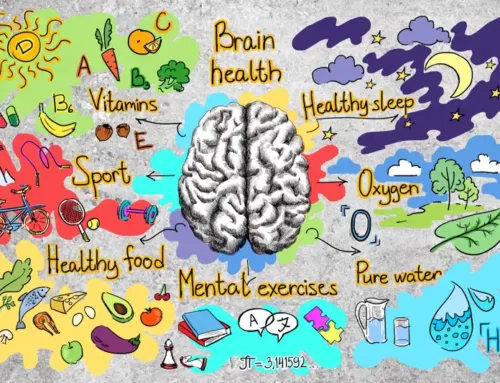
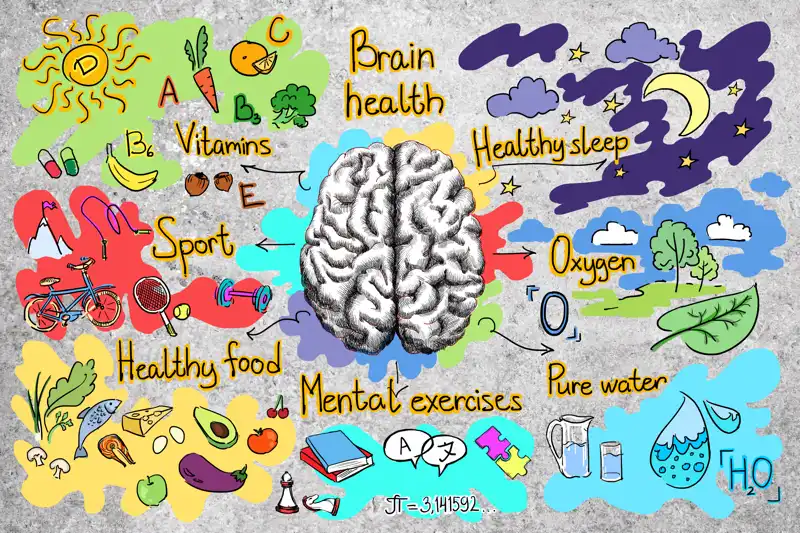
Even the best testing is only part of the picture. Your brain is a living, energy-demanding organ, and it depends on the right inputs to function well. Neurofeedback may help guide the brain toward healthier patterns, but diet, nutritional support, sleep, and exercise all play important supporting roles in building more resilient brain function.
- Diet: A healthier diet, such as she MIND Diet Plan gives your brain the raw materials it needs for energy production, neurotransmitter balance, and more stable mental performance.
- Nutritional support: When appropriate, personalized nutritional support may help address deficiencies or imbalances that can affect focus, mood, memory, and overall brain health.
- Sleep: Sleep is essential for memory consolidation, recovery, and healthy nervous system regulation. Poor sleep can make attention, mood, and cognitive performance worse.
- Exercise: Regular movement supports circulation, oxygen delivery, brain health, and stress regulation. It can also support sharper thinking and better day-to-day function.
In other words, stronger brain function is rarely built from one strategy alone. It is usually supported by a thoughtful, patient-centered combination of better information, targeted care, and healthier daily habits.
Gene Variances, Brain Function, and Targeted Nutrition

In some cases, inherited gene variances, also called Single Nucleotide Polymorphisms (SNPs), may affect how well your body makes and uses important brain chemicals, produces energy, handles stress, or uses certain nutrients. According to Dr. J Dunn’s writings, these small genetic differences may influence pathways tied to focus, mood, motivation, memory, and behavior when the body is not getting the specific nutritional support those pathways need.
This does not mean your genes are your destiny. It does mean there may be another layer worth understanding when brain fog, poor focus, low motivation, or other cognitive challenges do not improve the way you hoped they would.
Targeted nutrition may help support these slower or less efficient pathways by providing the raw materials and co-factors your body needs to function more effectively. In plain language, some people may do better when nutrition is personalized rather than generalized.
I have also received training from Dr. J Dunn in this area, and I address this aspect of care through Functional Gene Wellness.
When we take a closer look at brain function, health history, and the factors that may be affecting how your body works, we may be better able to identify where more specific nutritional support could be helpful as part of a thoughtful, patient-centered plan.
If you have been wondering whether neurofeedback may help you or someone you love, it may be worth taking a closer look at both brain performance and brainwave patterns so that care can be guided more thoughtfully.
What part of your mental performance have you been most concerned about lately: focus, memory, organization, or mental clarity?
If you know someone who struggles with brain fog, forgetfulness, or poor concentration, please share this article with them.
The more you know about how your body works, the better you can take care of yourself.
If you would like to learn more about a natural, whole-person approach to brain-based therapy and cognitive performance, I invite you to call the office to schedule a free consultation.
Schedule a Free Evaluation or call (586) 731-8840 and see how beneficial the Michigan Brain Health neurofeedback program can be for your brain fitness.
For more details about my natural approach with my patients, look at the book I wrote, Reclaim Your Life: Your Guide To Revealing Your Body’s Life-Changing Secrets For Renewed Health. It is available in my office, on Amazon, and in many other book outlets. If you found value in this article, please use the social sharing icons at the bottom of this post, and please share with those you know who are still suffering from chronic health challenges despite receiving medical management. Help me reach more people so they may regain their zest for living! Thank you!
ALL THE BEST – DR. KARL R.O.S. JOHNSON, DC, BCN – DIGGING DEEPER TO FIND SOLUTIONS